
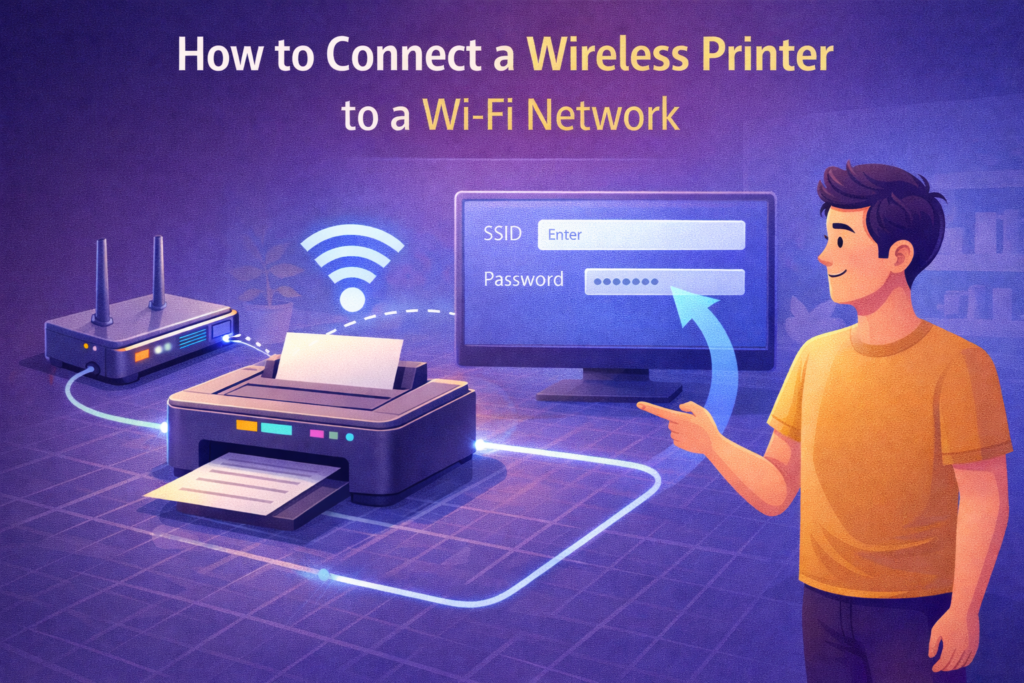
How to Connect a Wireless Printer to a Wi-Fi Network
(General Educational Guide)
Wireless printers are designed to send print jobs over a local network without requiring a physical cable connection. When connected to Wi-Fi, a printer may be accessible to multiple devices operating on the same network.
This page explains general concepts and commonly observed steps related to wireless printer connectivity. The exact experience can vary depending on printer design, operating system version, and network environment.
This content is provided solely for educational and informational purposes.
What Is a Wireless Printer?
A wireless printer is a printing device that communicates with computers or mobile devices through a local Wi-Fi network rather than a direct cable connection.
Wireless printers typically rely on:
-
Network connectivity
-
Device discovery mechanisms
-
Operating system permissions
If any of these elements are unavailable or restricted, the printer may not appear automatically on connected devices.
Items Commonly Required Before Connection
In many environments, the following items are typically needed before a wireless printer can communicate over Wi-Fi:
-
An active wireless network
-
A Wi-Fi-enabled printer that is powered on
-
A computer or mobile device connected to the same network
-
The wireless network name and password
These requirements are commonly referenced in printer documentation and general connectivity discussions.
General Steps Commonly Observed During Wi-Fi Connection
The steps below describe commonly referenced stages involved in connecting a wireless printer to a network. These are shared for general understanding and may differ by device.
1. Powering On the Printer
The printer is typically turned on and allowed to complete its startup process.
Some devices indicate readiness using a display screen, status message, or indicator light.
2. Accessing Wireless or Network Settings
Many printers include a wireless or network option within their control interface.
This may be accessed using physical buttons, a touchscreen panel, or a dedicated setup mode, depending on the device.
3. Selecting the Wi-Fi Network
From the list of available networks shown on the printer:
-
The local Wi-Fi network is selected
-
The network password is entered, if prompted
-
The printer waits for confirmation of network connection
A steady wireless indicator or confirmation message often suggests that a connection has been established.
4. Device Recognition by Operating Systems
Once the printer connects to the network, operating systems may detect it using built-in discovery features.
Detection behavior can be influenced by:
-
Network discovery settings
-
Security or firewall configurations
-
Driver availability
-
Differences between operating system versions
5. Adding the Printer to a Device
On desktop systems, printers may appear within the system’s printer or device settings and can be added from the available list.
On mobile devices, printing options may be accessible through system print menus or compatible printing interfaces, depending on the platform.
Confirming Network Communication
A test page or sample document is sometimes used to confirm that the printer is communicating over the network as expected.
Once connected, the printer may be available to other devices operating on the same local network.
General Usage Considerations
Some commonly discussed considerations related to wireless printing include:
-
Keeping the printer within a stable wireless signal range
-
Awareness that network changes may affect printer visibility
-
Understanding that system updates can influence device discovery behavior
Important Informational Notice
guidetoinstallation.info publishes independent educational content related to general printer and operating system concepts.
-
This website is not affiliated with any printer manufacturer or brand
-
No technical services, paid assistance, downloads, or device-specific actions are provided
-
Content does not replace official documentation
For model-specific or authoritative information, readers should consult the materials provided by the printer manufacturer or operating system publisher.